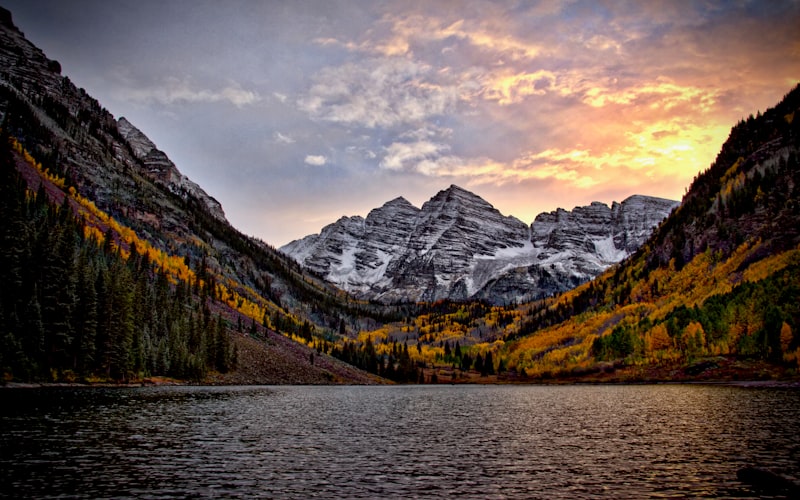
Aspen is an unlikely art town in the best sense - a ski resort that has accumulated, over decades of serious wealth and cultural ambition, an art infrastructure that would be impressive in a city ten times its size. The Aspen Art Museum, designed by Shigeru Ban, is one of the most architecturally extraordinary and programmatically ambitious contemporary art institutions in the Mountain West. The commercial galleries surrounding it are fed by a collector base of unusual sophistication and purchasing power. And the Aspen Institute, one of the country's most significant cultural and ideas institutions, gives the city an intellectual ambition that goes well beyond the resort norm.
The Aspen Art Museum
The Aspen Art Museum moved into its current Shigeru Ban-designed building in 2014, and the building has become as discussed as the art inside it - a woven facade of Colorado spruce and composite that shifts appearance through the day as the mountain light changes. The institution presents six to eight exhibitions per year, with a strong emphasis on emerging and mid-career international artists at pivotal moments in their careers. There is no permanent collection, a deliberate choice that keeps programming perpetually fresh and allows the museum to take risks with artists who might not yet be represented in traditional encyclopedic collections. The rooftop sculpture garden offers views of the Elk Mountains that constitute one of the most beautiful outdoor art environments in America. Admission is always free.
Commercial Galleries
Aspen's commercial gallery scene is compact in geography but serious in quality. Ann Korologos Gallery is the most prestigious commercial space in town, with a program of major contemporary painters, sculptors, and photographers - work of national and international standing that would hold up in any major city. The gallery has represented artists shown at Frieze, Art Basel Miami Beach, and other leading international fairs, and summer season shows attract serious collector attention from across the country and Europe.
Baldwin Gallery has operated in Aspen for decades with a program focused on contemporary painting, sculpture, and photography by artists of national standing. The summer season programming is particularly strong, timed around the festival audiences that bring culturally engaged visitors to the city from late June through August.
Galerie Maximillian specializes in European modernism and works on paper - Picasso, Miró, Chagall, and their contemporaries - providing a counterpoint to the contemporary emphasis of the other leading galleries, with a deep inventory that serves collectors interested in the historical roots of modern practice. Beyond these anchors, Aspen supports a rotating population of seasonal galleries and pop-up exhibition spaces that appear during the summer festival period, creating a fluid gallery ecosystem that rewards exploratory walking along Hyman and Hopkins Avenues.
The Aspen Institute
The Aspen Institute, founded in 1949 by Chicago businessman Walter Paepcke and his wife Elizabeth, was conceived from the beginning as a place where ideas, art, and nature would coexist in an alpine setting of extraordinary beauty. Paepcke's founding vision - that serious thinking and aesthetic experience were inseparable pursuits - continues to animate Aspen's sense of itself. The Institute's Doerr-Hosier Center presents programming at the intersection of art, culture, and ideas throughout the summer, with talks and events that attract figures from politics, business, science, and the arts, creating an intellectual atmosphere that elevates the city's cultural life well beyond the resort baseline. Anderson Ranch Arts Center in nearby Snowmass Village, founded in 1966, provides one of the country's most respected artist residency and workshop programs in ceramics, woodworking, painting, and digital arts.
The Festival Season
Aspen's cultural calendar peaks from late June through August, when the Aspen Ideas Festival, the Aspen Music Festival and School, the Aspen Santa Fe Ballet, and a dense schedule of gallery openings compress into a few intense weeks. The Aspen Music Festival, in operation since 1949, brings hundreds of students and dozens of world-class performers for eight weeks of orchestral, chamber, and opera programming - creating a cultural density that extends into the galleries and studios. Many galleries bring in new work specifically for this period and schedule openings around festival audiences. If visiting Aspen for art, summer is the time to come. The concentration of quality work and the quality of the audience creates an environment where serious art conversations happen naturally.
Public Art
Aspen's public art program has placed significant works throughout the city - sculptures in Paepcke Park, installations along the Rio Grande Trail, and commissioned works on civic buildings that give the urban landscape a level of artistic attention rarely found in resort communities. Walking the city with attention to its public art reveals a depth of investment in the aesthetic quality of public space that reflects the original Paepcke vision: that a beautiful environment and serious culture are mutually reinforcing.
Off-Season
January and February see Aspen at its most intensely ski-focused, but several galleries remain open and the collector base is still in residence. The pace is slower and conversations with dealers more extended - a genuine advantage if building relationships rather than browsing. The winter light on snow-covered mountains has its own quality, and the works in gallery windows along Hyman Avenue look different in the blue winter light than they do in summer. Spring (April and May) is the quietest time, when galleries are preparing summer shows and the town briefly exhales - a rare opportunity to experience Aspen without crowds.


