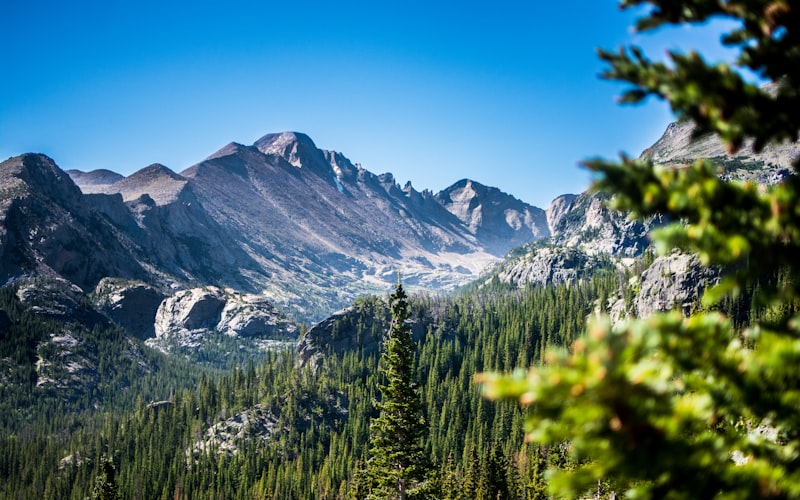
Boulder sits against the abrupt rise of the Flatirons, a sandstone backdrop that has drawn painters and photographers since the city's earliest days as a mining supply town. Today the art scene that backdrop helped inspire is less about any single gallery district and more about a set of overlapping communities: a walkable downtown mall lined with working studios and co-ops, a research university with its own museum and active studio art programs, and a countywide tradition of artists opening their doors once a year to anyone who wants to see how the work actually gets made.
The Pearl Street Mall
The Pearl Street Mall, a four-block pedestrian stretch of downtown Boulder closed to car traffic since 1977, is the most obvious starting point for a day of gallery-going. It was one of the earlier pedestrian malls built in the United States, and it set the template other Colorado mountain towns would later borrow: brick paving, street performers, and storefronts that mix galleries with restaurants and shops rather than segregating them into a separate arts quarter. The mall and the blocks around it hold a changing mix of galleries showing regional landscape painting, glass and ceramic work, and photography of the surrounding Front Range, alongside frame shops and studios that have operated in the same buildings for decades.
What distinguishes Pearl Street from a typical resort-town gallery row is that it was never built around tourism alone. Boulder's downtown retained its gallery presence through the ups and downs of the local economy partly because the city's historic preservation ordinances, among the strongest in Colorado, kept the nineteenth-century commercial buildings intact rather than letting them be redeveloped. Walking the mall today, the architecture itself is part of the draw: pressed-brick facades from the 1870s and 1880s now house contemporary art spaces.
The mall's open-air layout also means the line between gallery and street is thinner here than in most cities. Buskers, muralists, and the occasional sidewalk sculptor work the same blocks as the formal gallery storefronts, and the city has long tolerated — and in some periods actively encouraged — this mix of sanctioned and informal public art. Visitors who come expecting a quiet row of white-walled galleries sometimes find instead a livelier, more improvisational scene, where a glass-blowing demonstration or a chalk-art piece on the pavement sits a few doors down from a gallery specializing in Western landscape painting.
Open Studios and the Boulder County Arts Alliance
Once a year, typically in the fall, Boulder County's working artists open their home studios to the public through an open-studios tour coordinated by the Boulder County Arts Alliance. The event has run for decades and reflects something particular about the region: a very high concentration of working artists relative to the county's population, many of them living in the foothill towns outside Boulder proper — Nederland, Lyons, and the canyons running up into the mountains — rather than in commercial gallery spaces. For visitors used to browsing finished work on a gallery wall, the open-studios format offers something different: the chance to see a painter's actual working space, ask about process, and buy directly from the artist.
This studio-centered culture is partly an artifact of Boulder's economics. As the city has become one of the most expensive small cities in the Mountain West, commercial gallery rents on Pearl Street compete with tech offices and high-end retail, which has pushed some working artists toward cooperative models and toward studios in cheaper outlying towns, while galleries downtown increasingly function as a kind of shared showroom for artists who live and work elsewhere in the county.
The University's Footprint
The University of Colorado Boulder shapes the local art world more than its campus location on the eastern edge of downtown might suggest. The CU Art Museum, on campus, holds a permanent collection spanning historic and contemporary work and mounts rotating exhibitions that bring a different curatorial sensibility than the commercial galleries downtown — more likely to show experimental or conceptually driven work, and to put regional artists in dialogue with national and international ones. The university's studio art department has also fed a steady stream of working artists into the local scene, some of whom stay in Boulder after graduating rather than moving to larger markets, which helps explain why a city of Boulder's modest size supports as active an art community as it does.
Just off campus, the stretch of commercial blocks known as University Hill has a more informal, student-oriented character than Pearl Street, with smaller galleries and studio spaces that tend to turn over more quickly and show younger, less established artists. It is a useful counterpoint to downtown: where Pearl Street tends toward polished, market-ready work aimed at collectors and visitors, the Hill is closer to a proving ground, shaped as much by the rhythms of the academic calendar as by any commercial logic.
The Dairy Arts Center
A short walk from the mall, the Dairy Arts Center occupies a former dairy processing plant that the city and a local arts nonprofit converted into a multi-use cultural facility beginning in the 1990s. The building now houses gallery space alongside theaters, studios, and a cinema, and it functions as something closer to a community arts center than a conventional commercial gallery — showing work by local and regional artists on a rotating basis, often tied to classes and residencies run out of the same building. The adaptive reuse of an industrial building for the arts is itself a familiar Colorado story, echoed in other Front Range cities, but the Dairy's combination of visual art, performance, and film under one roof is distinctive even by that standard.
Taken together, Pearl Street's commercial galleries, the open-studios tradition reaching into the foothill towns, the university's museum and studio programs, and adaptive-reuse spaces like the Dairy give Boulder a gallery scene that rewards slower, less linear exploration than a single downtown strip. The art is there; it is simply distributed across a city that has always preferred its culture a little decentralized.