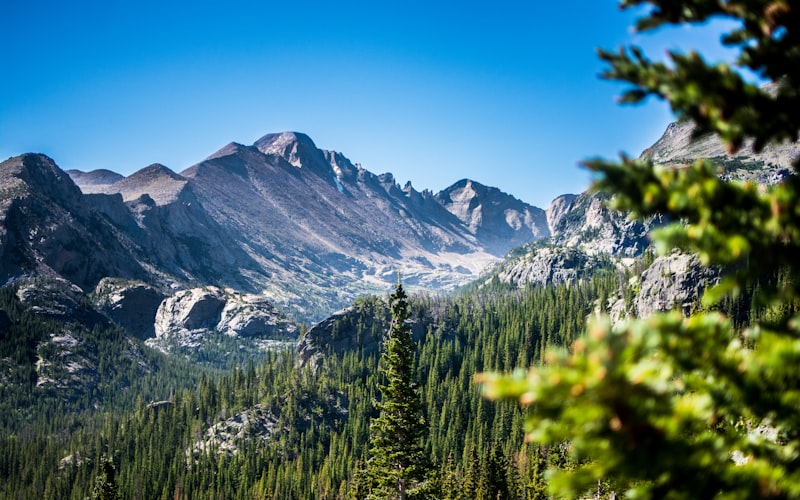
Colorado Springs sits at the base of Pikes Peak, a geography that has shaped its art scene as much as any museum board or gallery owner. The mountain's light and scale drew painters here more than a century ago, and that same light still pulls working artists to studios across the region today. Unlike Denver, an hour north, Colorado Springs has never tried to compete on sheer size. Instead it has built a scene organized around two centers of gravity: a serious, academically connected art museum downtown, and a cluster of independent galleries and studios six miles west in Manitou Springs.
The Colorado Springs Fine Arts Center at Colorado College
The anchor institution is the Colorado Springs Fine Arts Center, which merged with Colorado College in 2017 after operating independently for more than eight decades. The building itself, completed in 1936, is a significant work of Southwest Art Deco design by the architect John Gaw Meem, who is better known for shaping the look of Santa Fe and the University of New Mexico campus. That connection is not incidental. The Fine Arts Center grew out of the same regional modernist moment that produced the Santa Fe and Taos art colonies, and its early collection reflects deep ties to Southwestern and Native American art alongside American Impressionism and European works.
Its merger with Colorado College gave the museum a teaching mission to go with its collecting one. The Fine Arts Center now runs alongside the college's art department, hosts rotating exhibitions that draw on both its permanent holdings and traveling shows, and maintains a performance and education wing that distinguishes it from a purely object-focused museum. For visitors, this means a museum that feels embedded in an active academic community rather than sealed off as a static collection.
Downtown Galleries and the First Friday Tradition
Downtown Colorado Springs has developed a modest but genuine commercial gallery presence, concentrated along Tejon Street and the surrounding blocks near the Fine Arts Center. Like many cities across the Southwest, Colorado Springs observes a monthly First Friday gallery walk, when participating spaces extend their hours and the downtown core takes on a more social, pedestrian character. The scale here is smaller than Santa Fe's Canyon Road or Scottsdale's Main Street, and that is part of the appeal: visitors can see most of what's on view in an evening without the crowds of a larger art market.
Downtown's cultural footprint has grown in recent years with the addition of the U.S. Olympic and Paralympic Museum, a design-forward institution that, while focused on sport rather than fine art, has reinforced downtown Colorado Springs as a place worth a dedicated cultural visit and has drawn more foot traffic to the surrounding gallery blocks. The city's proximity to the U.S. Air Force Academy and several military installations has also left a mark on its visual culture, with a number of regional artists working in realist and historical traditions alongside the more contemporary and craft-based work found in the smaller galleries. This mix gives Colorado Springs a slightly different character than the land-art and abstraction-heavy scenes found in some other Rocky Mountain towns.
No discussion of art in Colorado Springs can leave out Garden of the Gods, the public park of towering red sandstone formations on the city's western edge. Long before it became a protected city park, this landscape of eroded red rock set against the backdrop of Pikes Peak drew nineteenth-century American landscape painters, part of the broader westward movement of artists who traveled to the Rocky Mountains to record their scale and color for audiences back east. That visual relationship between dramatic red rock and distant snow-capped peak has never really left the local art consciousness. Painters and photographers working in and around Colorado Springs today still return to the same compositional problem their predecessors faced: how to render rock, mountain, and open sky in proportion to one another. The region's galleries reflect that inheritance in their landscape and plein air offerings, even when individual artists are working in thoroughly contemporary styles.
Manitou Springs: An Arts Colony in Miniature
Six miles west, at the literal base of Pikes Peak, Manitou Springs offers a different and in some ways more atmospheric experience. The town was built around its mineral springs in the late nineteenth century as a health resort, and that Victorian-era resort architecture, narrow streets, and walkable downtown have made it an attractive place for working artists and craftspeople for generations. Manitou Springs retains the feel of a small-town arts colony: studios and galleries are often owner-operated, housed in historic storefronts, and mixed in among longtime local businesses rather than consolidated into a single purpose-built arts district.
Community arts organizations in Manitou Springs have long supported this studio-based scene, offering shared workspace and exhibition opportunities to local artists working in clay, fiber, and other craft media alongside painting and photography. Combined with the town's reputation as a slightly offbeat, independent-minded counterpart to the more polished retail core of downtown Colorado Springs, this gives Manitou Springs an identity distinct from any single gallery or institution. Visitors who make the short drive between the two towns often describe them as complementary halves of a single regional scene: one institutional and collection-driven, the other intimate and studio-driven.
A Different Kind of Rocky Mountain Art Town
Set against Colorado Springs and Manitou Springs, it is worth noting what the city is not. It lacks the international art-fair infrastructure of Aspen, the gallery density of Santa Fe's Canyon Road, or Denver's large contemporary museum complex. What it offers instead is a more approachable, locally rooted art ecosystem: a historically significant museum building with genuine Southwestern design pedigree, a college community that keeps programming active year-round, a landscape tradition written into the very rock formations west of downtown, and a nearby mountain town where visiting a working artist's studio still feels like an unplanned discovery rather than a curated stop on a gallery map.
For travelers moving between Denver and Santa Fe, or exploring the Front Range on their way toward the broader Southwest, Colorado Springs rewards a slower look. The Fine Arts Center alone justifies an afternoon, Garden of the Gods offers a reminder of why painters came here in the first place, and the short drive up to Manitou Springs turns a single stop into a fuller picture of how art and place have shaped each other at the foot of Pikes Peak.