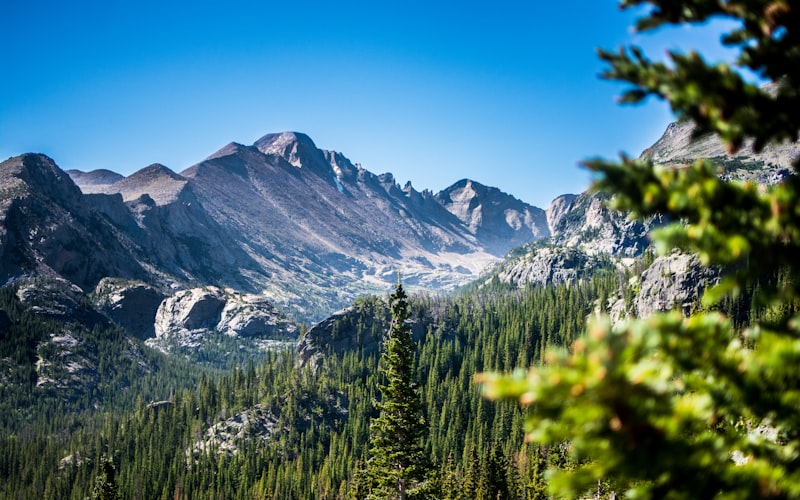
Telluride sits at the dead end of a box canyon in Colorado's San Juan Mountains, hemmed in on three sides by peaks that top 13,000 feet. There is only one paved road in and out of town, a geographic accident that has done more to shape Telluride's art scene than almost anything else. The isolation that once made the town a difficult place to mine silver now makes it a difficult place to overbuild, and the result is a gallery district that has grown slowly, inside a historic core that has changed remarkably little in more than a century.
A Silver Camp's Second Act
Telluride was built on silver and gold mining in the 1870s and 1880s, and the wealth of that boom is still legible in the false-fronted brick and wood-frame buildings lining Colorado Avenue, the town's main street. The entire downtown is a National Historic Landmark District, and local preservation rules have kept the scale and character of the original mining town largely intact even as Telluride became one of the country's more prominent ski resorts in the 1970s. That continuity matters for the art scene: galleries, framers, and studios operate out of the same narrow storefronts that once housed assay offices, saloons, and mercantiles, so a walk down Colorado Avenue is itself a piece of Southwest art history before a visitor ever steps through a gallery door.
The Telluride Historical Museum, housed in a former miners' hospital built in 1896, anchors that history at the edge of downtown and gives context for everything else in town: the hard-rock mining economy that built Telluride, the Ute presence in the San Juans before European settlement, and the long transition from extraction to tourism and the arts that defines the region today.
Telluride Arts and a Compact Gallery District
The nonprofit organization Telluride Arts has functioned for decades as the connective tissue of the local scene, supporting working artists, maintaining studio and gallery space, and organizing the town's recurring Art Walk, typically held on the first Thursday of the month during the warmer seasons. On Art Walk evenings, galleries along and just off Colorado Avenue stay open late, often with artists on hand to talk about their work, turning a few compact blocks into a walkable, unhurried version of the gallery-crawl format found in larger Southwest art markets like Santa Fe or Scottsdale, but scaled to a town of a few thousand year-round residents.
The Ah Haa School for the Arts, housed in a converted historic warehouse that once stored coal and feed, is one of the more distinctive institutions in this district. It functions primarily as a teaching organization, offering workshops across ceramics, painting, printmaking, and other media, but its exhibition space also gives visiting and resident artists a venue outside the commercial gallery system, and it reflects a broader pattern in Telluride: the line between art education, artist residency, and gallery display is thinner here than in bigger cities, partly because the town is simply too small to support rigid separation between those functions.
Festivals as the Town's Real High Season
Telluride's cultural calendar is organized less around a conventional gallery season than around its festivals, and those events shape when the art world pays attention to the town. Mountainfilm, held over Memorial Day weekend, brings documentary filmmakers and adventure-sports storytellers to Telluride and has, over its decades-long run, built a strong sideline in visual art and photography tied to its themes of wilderness, exploration, and environmental change. The Telluride Bluegrass Festival in June fills the town's outdoor Town Park with music fans, many of whom spend festival mornings and late nights wandering Colorado Avenue's shops and galleries between sets. And the Telluride Film Festival over Labor Day weekend, one of the most respected and famously low-key festivals in American film, brings a different, more international crowd whose presence tends to spike interest in the town's photography and fine-art print galleries.
For a visitor trying to time a trip around the art scene specifically, this matters practically: galleries here are not indifferent to the ski season either, but the town's peak cultural energy, and the moments when its art spaces are most active and best attended, line up with festival weekends rather than with the winter tourist calendar that dominates most Colorado mountain towns.
A Smaller, Steeper Alternative to Aspen
It is almost impossible to discuss Telluride's art scene without comparing it to Aspen, the other Colorado mining-town-turned-ski-resort with serious cultural ambitions. The comparison is useful mostly for what it reveals by contrast. Aspen built a globally recognized art institution in the Aspen Art Museum, designed by Shigeru Ban, and its gallery scene includes branches of blue-chip dealers with significant secondary-market inventory. Telluride has never pursued that scale, and its geography makes it unlikely to: a box canyon with one road in has a hard physical ceiling on growth that the broader Roaring Fork Valley around Aspen does not share.
What Telluride offers instead is proximity and informality. Working artists live in and around the town in numbers that are notable for its size, galleries tend to be owner-operated rather than corporate branches, and the compactness of downtown means a visitor can see most of the gallery district in an afternoon on foot. That same intimacy distinguishes Telluride from other Colorado mountain markets like Vail and Beaver Creek, where art retail skews heavily toward resort-driven decorative work, and from Steamboat Springs, whose art scene is real but less consistently organized around a single walkable historic core. For visitors already working through the galleries of Santa Fe, Scottsdale, or Aspen, Telluride reads less like a smaller version of those markets and more like a genuinely different model: an art town shaped first by its mining history and its mountains, and only secondarily by the tourist economy that keeps it running today.