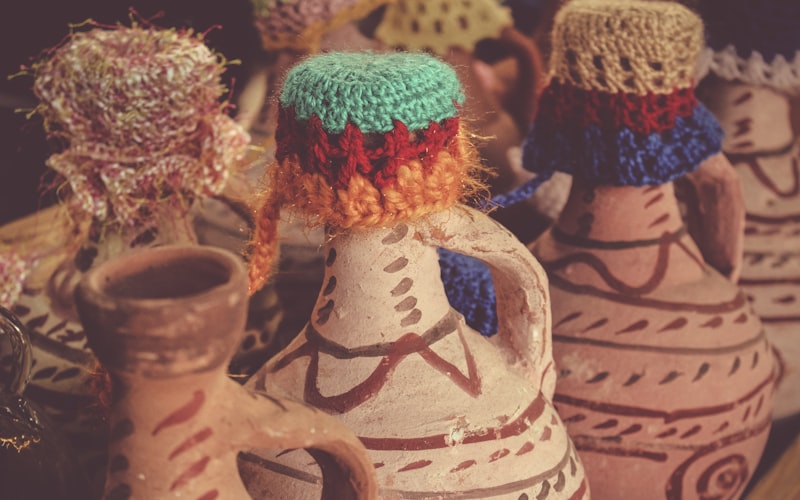
The American Southwest has one of the world's richest craft traditions - a three-way conversation between Indigenous, Spanish Colonial, and Anglo-American making that has been ongoing for centuries and continues to produce work of extraordinary quality and cultural depth. Finding the best of it requires knowing where to look and understanding what distinguishes the genuinely extraordinary from the simply decorative.
The Museum of International Folk Art
The Museum of International Folk Art in Santa Fe houses the world's largest collection of international folk art - over 130,000 objects from more than 100 countries - and serves as the essential institutional context for understanding the craft traditions of the Southwest. The permanent gallery, designed by Alexander Girard and installed in 1982, is one of the most visually overwhelming museum experiences in the Southwest: thousands of objects arranged in dense theatrical dioramas that reward slow, close looking. The New Mexican and Southwestern collections are particularly strong, with deep holdings in Hispanic tinwork, santos, and colcha embroidery alongside Indigenous pottery, basketry, and textile. The museum's special exhibitions regularly bring international craft traditions into dialogue with Southwestern ones, contextualizing local practice within a global history of making. A visit here before exploring the commercial gallery market pays dividends: the museum provides the historical and aesthetic framework that makes the best commercial galleries intelligible.
Hispanic and Spanish Colonial Traditions
New Mexico's Spanish Colonial craft tradition is among the oldest continuously practiced in North America. Santos - the carved and painted devotional figures produced by santeros for Catholic worship - have been made in New Mexico since the 18th century and remain a living tradition today. The Spanish Colonial Arts Society in Santa Fe maintains a collection and the annual Spanish Colonial Art Market held each July, which represents the finest contemporary santeros working in New Mexico. Several galleries on Canyon Road specialize in antique and contemporary santos, tinwork, and painted furniture. The Museum of Spanish Colonial Art, on Museum Hill in Santa Fe, presents the definitive collection of this tradition with historical depth and scholarly context unavailable anywhere else.
Contemporary Studio Craft
Mariposa Gallery in Albuquerque's Nob Hill neighborhood has been a leader in contemporary American studio craft since 1974 - one of the longest continuously operating craft galleries in the Southwest. The focus is studio jewelry, ceramics, glass, and fiber art by living artists, with an emphasis on work that uses craft traditions as a starting point for contemporary artistic investigation rather than as a constraint. The quality is consistently high, and the gallery has launched numerous artists who have gone on to national and international exhibition careers.
Santa Fe Clay operates as both an art school and a gallery dedicated entirely to ceramic arts - a dual focus that has made it an important gathering place for ceramicists at every level from student to internationally exhibited artist. The gallery program includes both utilitarian and sculptural work, and the school's visiting artist series regularly brings important figures to Santa Fe, generating an educational environment that has influenced the Southwest's ceramic arts community for decades.
Studio Glass
Philabaum Contemporary Art Glass in Tucson is among the country's leading venues for studio glass - a medium the Southwest has embraced with unusual enthusiasm given its tradition of working with light and color in all media. The technical ambition of the work goes well beyond decorative intent; several represented artists show in major museum exhibitions and are collected by institutions including the Smithsonian's Renwick Gallery. The Southwest's exceptional light has attracted glassblowers who find the region's visual environment uniquely sympathetic to their medium's expressive possibilities.
Trading Posts and Markets
The Southwest's historic trading posts - Cameron Trading Post north of Flagstaff, Hubbell Trading Post National Historic Site in Ganado, Arizona, and others throughout the Diné Nation - provide access to Indigenous-made work in a context that predates the commercial gallery system and operates by different rules. Hubbell, operated by the National Park Service, sells work by Diné weavers directly in a historic post that has been facilitating trade since 1876. The annual Indigenous art markets in Santa Fe each August and the Heard Museum's annual market in Phoenix are the most important public events for collecting Indigenous craft at the highest level, bringing together artists of demonstrated quality in a curated, competitive context.
Chimayó and the Northern Villages
The small communities of northern New Mexico - Chimayó, Truchas, Cordova, Trampas - sustain craft traditions of extraordinary depth in weaving, woodcarving, and embroidery that date to the Spanish colonial period. Ortega's Weaving Shop in Chimayó has been producing Rio Grande-style blankets and rugs on traditional looms since 1900. The village of Cordova is known for unpainted santos and animal figures carved in the local cottonwood root - work of severe economy and expressive power. These village traditions are not primarily oriented toward tourist consumption; they exist because the communities that maintain them value the making. Visiting respectfully and buying directly from makers is the most meaningful way to engage with this aspect of Southwestern craft culture.
What to Look For
In the Southwest craft market, provenance and authentication matter differently than they do for fine art. For traditional Indigenous work, federal law requires that work sold as Indigenous-made be produced by a tribally enrolled or certified artist - a legal protection that has not eliminated fraudulent work but gives buyers legal recourse. Always ask galleries and vendors for artist information: name, tribal affiliation, and any relevant certifications or exhibition history. For contemporary studio work, artist statements and exhibition history are the relevant markers of quality. The distinction between fine craft and folk art - never stable anywhere - is particularly blurred in the Southwest, which creates opportunity for collectors willing to look past category labels and focus on the work itself.


