Indigenous Art of the Southwest: Traditions Living and Evolving
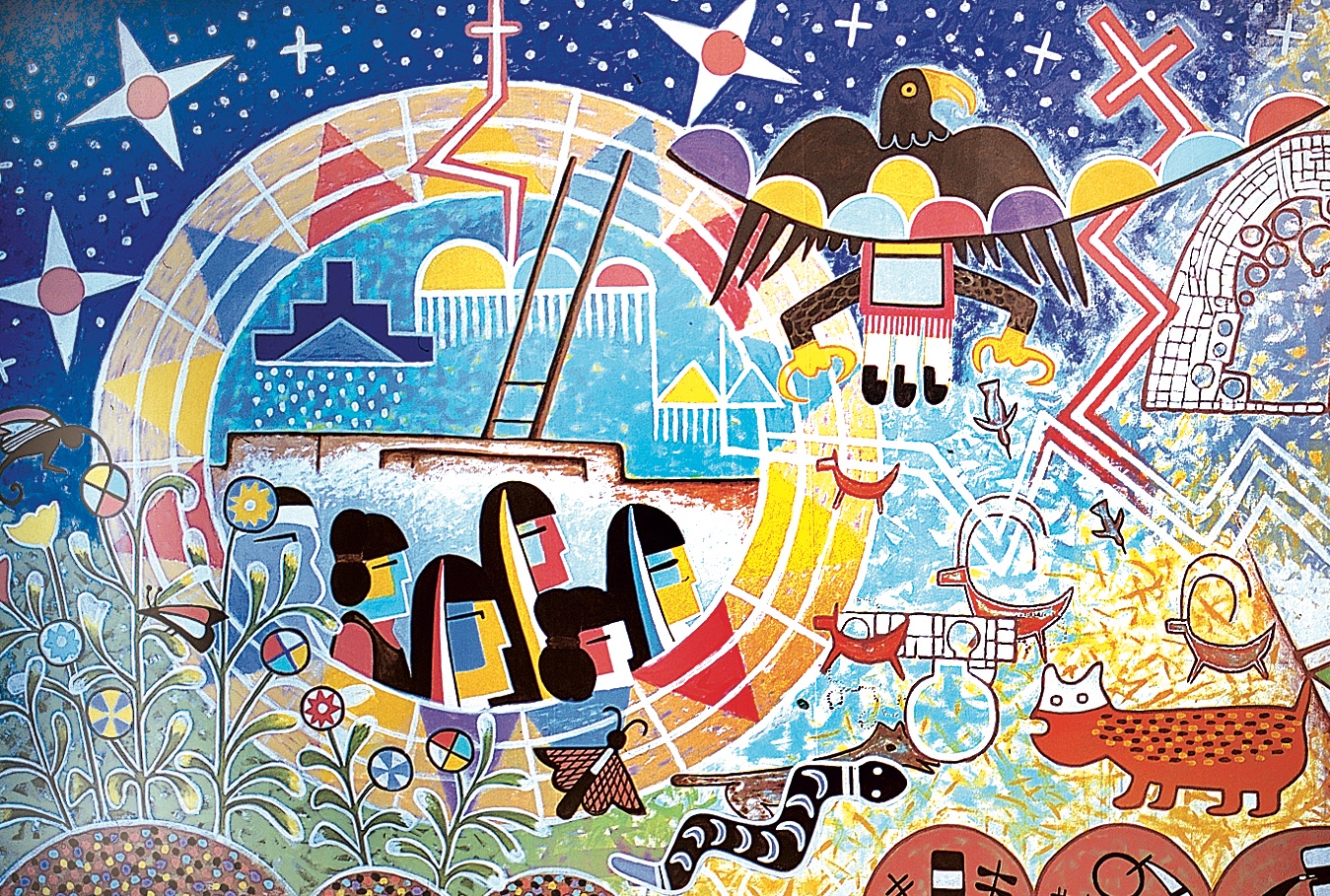
The Indigenous artistic traditions of the American Southwest are among the oldest continuous art-making practices in the Western Hemisphere, with ceramic, textile, and rock art traditions extending back thousands of years before European contact. The Ancestral Puebloans who built the cliff dwellings of Mesa Verde and Chaco Canyon produced pottery of extraordinary technical refinement; the geometric designs on their black-on-white vessels have directly influenced Pueblo pottery made today. The Mimbres people of southwestern New Mexico created ceramic bowls with figurative designs, animals, insects, mythological beings, of such visual intelligence that they remain among the most celebrated prehistoric ceramic images in the world. This depth of creative ancestry is the foundation on which living Indigenous artistic traditions stand.
The Southwest is home to a remarkable diversity of Indigenous artistic traditions corresponding to the many distinct nations of the region. Diné weaving, particularly the extraordinarily complex tapestry blankets produced in the 19th century and collected worldwide as among the finest textiles in any tradition, continues today through a community of weavers maintaining the tradition at the highest levels. Hopi kachina carving, the production of cottonwood figures representing the kachina spirit beings of Hopi religion, has developed from a primarily religious practice into a recognized art form whose finest practitioners command significant market prices. Zuni fetish carving, Navajo sand painting, Apache basketry: each of these traditions has its own long history and its own community of living practitioners.
Contemporary Indigenous artists from the Southwest are reshaping the international art world's understanding of what Native American art can be. Jaune Quick-to-See Smith, a Confederated Salish and Kootenai Tribes citizen who grew up in the Northwest but has long been associated with New Mexico, uses map imagery, collage, and political text to engage the colonial history of North America in work that appears regularly in major museum exhibitions worldwide. Rose Simpson, a Santa Clara Pueblo artist who trained at the Rhode Island School of Design, makes large-scale ceramic sculpture that draws on her Pueblo heritage while engaging the full range of contemporary sculptural discourse. These artists, and dozens like them, have made the conversation about Indigenous art inseparable from the broader conversation about contemporary art.
Collectors approaching Indigenous art should educate themselves about the Indian Arts and Crafts Act, which prohibits the misrepresentation of non-Native-made work as Native-made, and seek out galleries and dealers who provide clear documentation of artists' tribal enrollment. The annual Indian Market in Santa Fe, held each August on the Plaza, is the most significant annual gathering of Indigenous artists in the country, with artists from hundreds of nations selling directly to collectors with guaranteed authenticity. The Heard Museum Guild Indian Fair and Market in Phoenix is a comparable event in the spring. Both are essential occasions for collectors at every experience level.
 Museum